Spaying prevents female cats from violence and potential injury from males, calms wandering behavior, and most importantly prevents overpopulation. A single unspayed female can have two or more litters per year, and each of those kittens can reproduce at an alarming rate, increasing the feral population and resulting disease and suffering. The offspring of a single unspayed female cat can produce up to 4948 kittens in just seven years.
An un-neutered male can impregnate countless females in a very short time. Therefore, multiply the figure above by dozens of females impregnated by a single male cat and yo will see how important it is to get your male cat neutered. It will also give him a happier, calmer life free of injury from competing males.
 | Benefits of Vaccines for Cats |
Key Benefits of Vaccines
- Prevents serious illness: Protects cats from potentially fatal diseases.
- Reduces disease spread: Crucial in multi-cat households, shelters, and outdoor settings.
- Essential for kittens: Early vaccination is lifesaving.
- May be required for boarding/grooming/travel: Many facilities require up-to-date vaccinations.
- Cost-effective preventive care: Treating these illnesses is more expensive than preventing them.
While vaccines represent one of the greatest achievements in preventive medicine, no vaccine is 100 percent effective; and they don’t induce the same degree of protection in every cat. For this reason, exposure of even vaccinated cats to other cats or environments in which infectious agents may be found should still be minimized.
Vaccinating Kittens
Kittens are susceptible to a variety of infections due to their immature immune systems. Vaccination at the appropriate time and minimizing exposure to infectious agents are thus very important, particularly in kittens for which the history of adequate nursing from the mother is unknown.
Vaccinating Adult Cats
Adult cats with unknown vaccination status should be treated as unvaccinated, and should receive the full series of vaccines outlined for kittens. Adult cats that are overdue for vaccinations should receive booster vaccines, regardless of the interval since the previous vaccination.
Recommended Vaccines
The American Association of Feline Practitioners Vaccination Advisory Panel recommends that all household cats kept indoors at all times receive the following vaccines:
FVRCP
- FVR – Feline Viral Rhinotracheitis: This virus causes upper respiratory infection with fever, sneezing, eye and nasal discharge, conjunctivitis leads to upper respiratory. Kittens have an increased risk of infection.
- C – Calicivirus: This highly contagious virus is one of the major causes of upper respiratory infection in cats. Affected cats may have sneezing, eye and nasal discharge, conjunctivitis, lethargy, loss of appetite, sores on the gums and soft tissues of the oral cavity, and lameness. In some cases, affected kittens may develop pneumonia.
- P – Panleukopenia (feline distemper): This highly contagious and potentially lethal virus causes fever, vomiting, diarrhea, loss of appetite, and in some cases, sudden death. Kittens are particularly susceptible.
Rabies: This deadly viral infection most commonly spreads through bite wounds, but can also be transmitted to any mammal by exposure of an open wound to the saliva of an infected animal. Skunks, raccoons, coyotes, foxes, and bats are the most common wild carriers in North America. Humans are at risk of infection if bitten by an infected animal or if the saliva of an infected animal comes into contact with an open wound. Rabies is routinely fatal once symptoms develop.
Feline Leukemia Virus (FeLV): The leading cause of virus-associated deaths in cats, FeLV spreads through the saliva, nasal secretions, feces, urine, and milk of infected cats. Casual contact, bite wounds, and nursing can all transmit the infection. Roughly 50 % of cats diagnosed with FeLV succumb to the disease within two and a half years. Infected cats may suffer from anemia, immune suppression, and cancer.
 | What to Know Before and After Surgery |
Before arriving at the veterinarian, please familiarize yourself with the important information below to help your pet have the best possible outcome. Following the pre- and post-operative instructions is critical to your pet’ s recovery. If you have any questions or notice unusual changes in your pet’s condition after surgery, don’t hesitate to contact us.
Pre-Operative Instructions
- Adult cats and dogs must be fasted before surgery. No food after midnight the night before surgery. Small amounts of water are fine.
- Kittens (younger than 5 mo) and puppies (younger than 3 mo) should have a small snack (1 tsp or less, preferably wet food) before 6 a.m. the morning of the surgery, with very small amounts of water.
- Pets should be kept indoors or confined the night before surgery. This ensures that they are not eating unknown/foreign objects outside, which could potentially be dangerous during surgery.
- Walk dogs as usual on the morning of surgery.
- Cats must be in a secure carrier upon arrival. One cat per carrier.
- Dogs must be in a secure carrier or on a leash upon arrival. Leave dogs in the care when you check in for surgery.
Post-operative Instructions
- Don’t let your pet lick or chew the incision. Licking or chewing at the incision can cause infection. We recommend using a surgery recovery cone or inflatable collar to prevent this. Do not allow other pets in the household to lick the incision.
- Keep your pet calm. No running, jumping, playing, or other strenuous activities for 7 to 10 days. Rest gives the issue time to heal and helps the incision stay closed. Keep kids away – if your pet is in pain it may nip to protect itself.
- Pets should remain indoors to stay clean, dry, and warm. No baths during the recovery period – water may affect the incision site and cause infection. Dogs must be walked on a leash; cats should stay indoors.
- Feed your pet half of their regular meal the evening after the surgery. Return to normal feeding portions the next day.
- Check the incision site twice daily for any signs of drainage or significant redness/swelling. See below for images of what a normal, routine incision for a female spay surgery should look like.
- Your pet will receive a small, green tattoo near the incision site. This tattoo is not another incision – it’s just a small score in the top layers of the skin, filled with tattoo ink and covered with surgical glue. The tattoo will ensure that anyone examining your animal will know s/he has been spayed or neutered.
- Avoid giving your pet junk food, table scraps, or milk during recovery as it could mask complications.
- Separate animals. Keep females away from unneutered males for 7 days. Keep males away from unspayed females for 30 days.
- No human medications. Giving human medications after surgery is dangerous and can be fatal. Your pet has already received long-acting pain medications.
- Contact Pet Helpers if you notice any of the following within 24hrs after surgery: pale gums, depression, unsteady gait, loss of appetite, decreased water intake, vomiting, diarrhea, discharge or bleeding from the incision, difficulty urinating or defecating, or labored breathing.
We recommend scheduling a post-op exam with your regular veterinarian within 7 to 10 days to check the incision and discuss follow-up care. If your pet received a vaccine at our clinic other than rabies, please discuss a “booster” vaccine with your regular vet.
Incision Healing Images The below images show what a normal, routine incision for a female spay surgery should look like during the healing process. Notice the small green tattoo which indicates that your pet has been spayed.
 | Benefits of Microchipping Your Pet |
What is Microchipping and How Does It Work?
Microchipping is a simple procedure that can make a huge difference in your pet’s life. A microchip is a tiny device, no bigger than a grain of rice, that is inserted under your pet’s skin, usually between the shoulder blades. This process is quick, relatively painless, and akin to getting a vaccination shot. Each microchip contains a unique ID number. When a scanner passes over the chip, it reads this ID number. This number is your ticket to reuniting with your pet if they ever get lost, as it can be used to retrieve your contact information from a national pet recovery database.
Microchipping is a permanent identification form
A significant advantage of microchipping is its permanence. Unlike collars and tags, which can be easily lost or removed, a microchip provides pets with lifelong ID. This tiny device is embedded under your pet’s skin, making it tamper-proof and impossible to lose. As a result, your pet can always be identified and returned to you, even if they lose their collar or ID tag, or if their tag becomes worn and illegible.
We highly recommend that you microchip your pet in addition to, not instead of, using a collar and tag for pet identification. The combination will increase the likelihood of a quick and easy return of a lost pet.
Microchipping your pet greatly increases your chance of reuniting
Statistics show that microchipped pets are significantly more likely to be reunited with their owners than pets who are not microchipped. According to the American Veterinary Medical Association (AVMA), lost dogs with microchips are returned to their owners at a rate of 52.2%, compared with just 21.9% for those without. For cats, the difference is even more striking: Microchipped cats are reunited with their owners at a rate of 38.5%, compared with only 1.8% for cats who are not microchipped.
When ID tags are combined with a microchip, success rates increase by 50%.
Microchipping is a quick and simple procedure
Microchipping is a quick and relatively painless procedure, similar to getting a routine vaccination. A microchip is made of surgical grade glass, and it’s about the size of a grain of rice. There won’t be any allergic reaction or other side effects, and microchipping does not require anesthesia. Most pets experience minimal discomfort, and the process is over in a matter of seconds. Once implanted, the microchip does not cause any ongoing pain or discomfort, allowing your pet to continue with their daily activities uninterrupted.
Microchipping provides your pet with lifelong protection
One of microchipping’s advantages is that the device provides lifelong protection for your pet. Once the chip is implanted, it lasts for the rest of your pet’s life and requires no maintenance or replacement.
Microchipping helps deter pet theft
A microchipped pet is less attractive to thieves, as the permanent identification form makes it easier to trace the pet back to their rightful owner, reducing the incentive for theft. If your pet is stolen, a microchip can be a crucial tool for recovery. Stolen pets are often sold or relocated far from their homes, increasing the challenge of being able to track them down. A microchip provides indisputable proof of ownership, helping law enforcement and rescue organizations return your stolen pet to you.
If your pet is recovered and scanned, the microchip immediately identifies your pet, increasing the likelihood of a swift and successful reunion. This added security layer offers you peace of mind, knowing that your pet is always linked to you, even if they are taken.
Microchip information can be updated anytime, anywhere.
It’s always possible to update your data, and your pet isn’t physically involved in the process. Be sure to contact the microchip company if you move or if any other information changes. Giving them information for one or more secondary contacts such as friends or family is a good idea in case you are not readily available.
Most shelters and vets have microchip scanners.
Certainly, a microchip needs a scanner to be of any use. But almost all vets and animal welfare organizations have scanners. Microchip manufacturers make universal microchip readers available to the shelter community that can read microchip numbers from different companies.
When an animal is taken to a vet or a shelter, it is scanned in case it has a microchip number. The microchip company is contacted for the owner’s information. The registered owner is then contacted.
 | Ear-Tipping Cats: What It Is and Why It’s Done |
For cats that roam outdoors, it is beneficial for the cats and for the community to be able to easily, visually identify if cats have already been spayed or neutered. Ear tipping is the universally accepted way to signify that an outdoor cat has been spayed or neutered, which means no new kittens will be born — and that’s a good thing.
What is cat ear-tipping?
Cat ear-tipping involves surgically removing a small portion (typically about 3/8 inch) of one of a cat’s ears while the cat is under anesthesia for spay or neuter surgery
What does it mean when a cat’s ear is tipped?
Ear-tipping cats allow anyone to tell from a distance whether an outdoor cat has been spayed or neutered. That tipped ear saves the cat the stress of being caught and anesthetized for a second time due to the well-meaning efforts of people trying to help decrease the pet overpopulation problem by getting outdoor cats spayed and neutered.
Does ear-tipping hurt a cat?
Cat ear-tipping is extremely safe and is performed while the cat is already anesthetized for spay or neuter surgery. There is little or no bleeding involved, and it is not painful for the cat. The ear heals up quickly, and the tipped ear doesn’t detract one bit from the appearance or beauty of the cat.
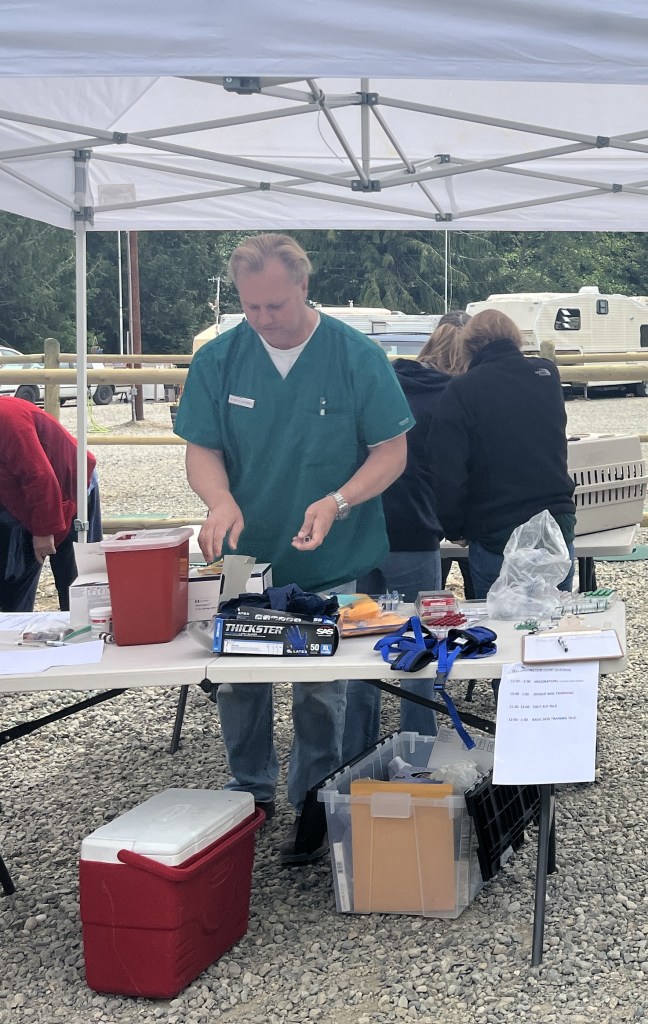
Past Vaccination Clinics:
Our vaccination clinic on April 2025 was a huge success with 96 animals served!
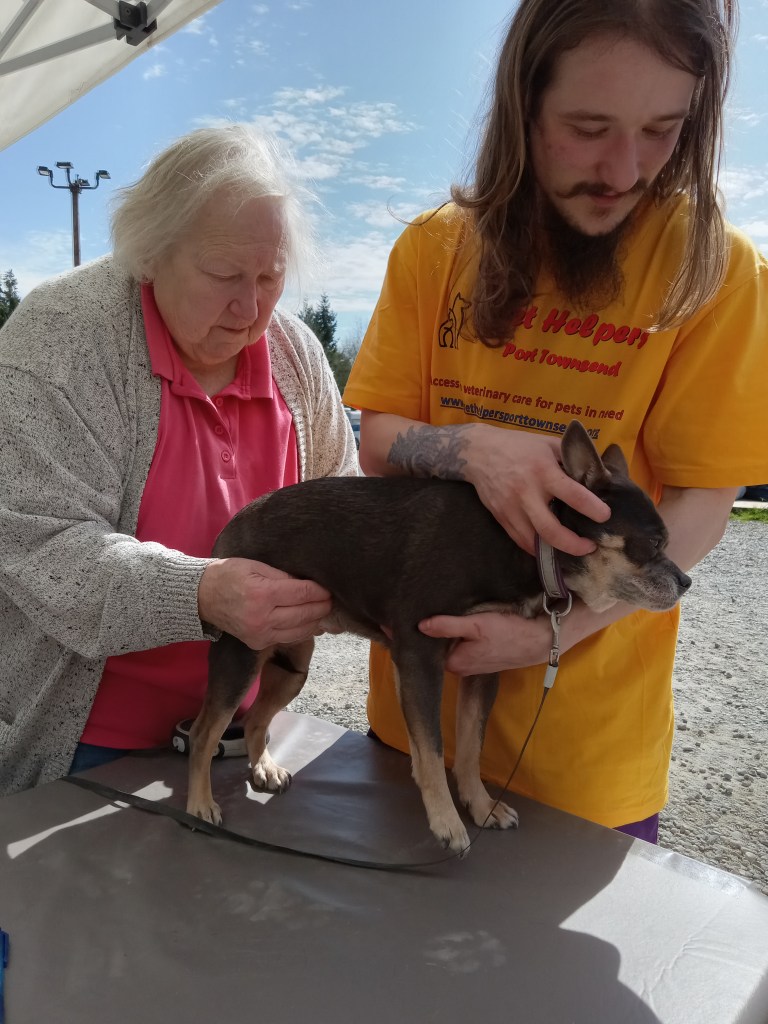
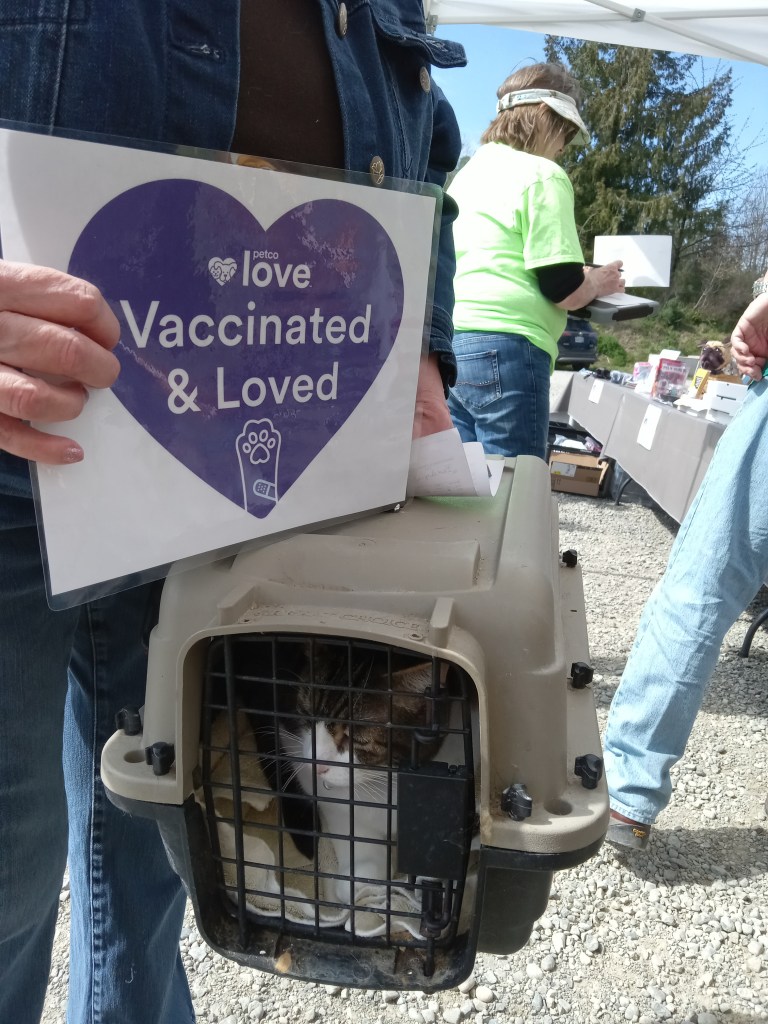
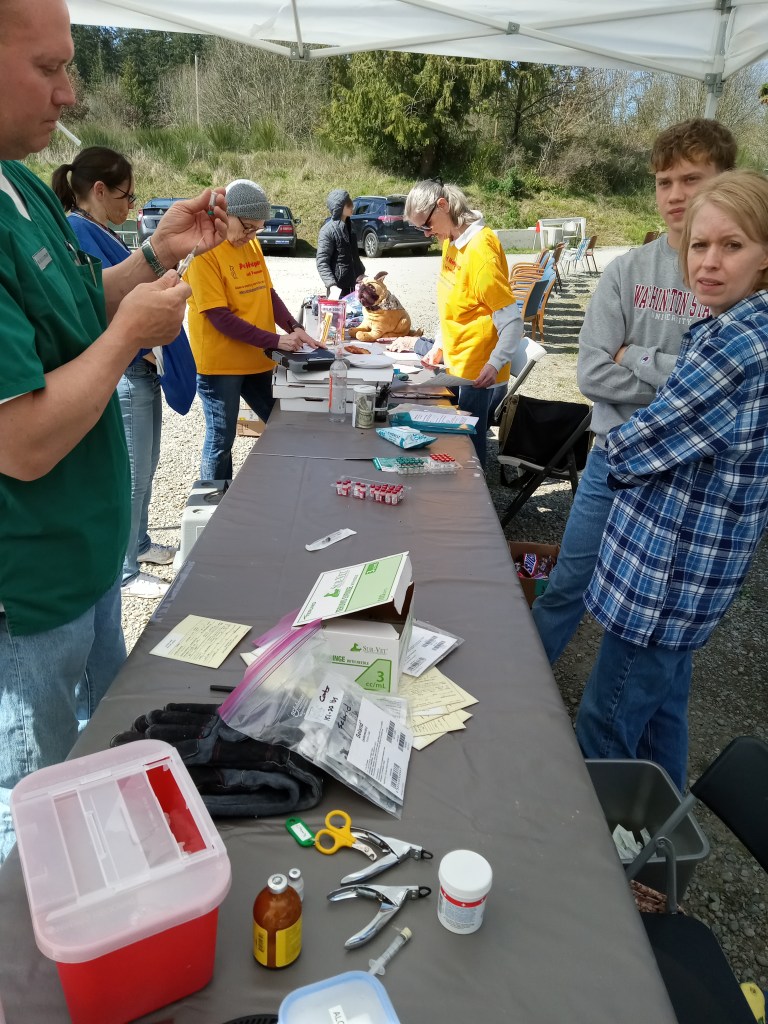
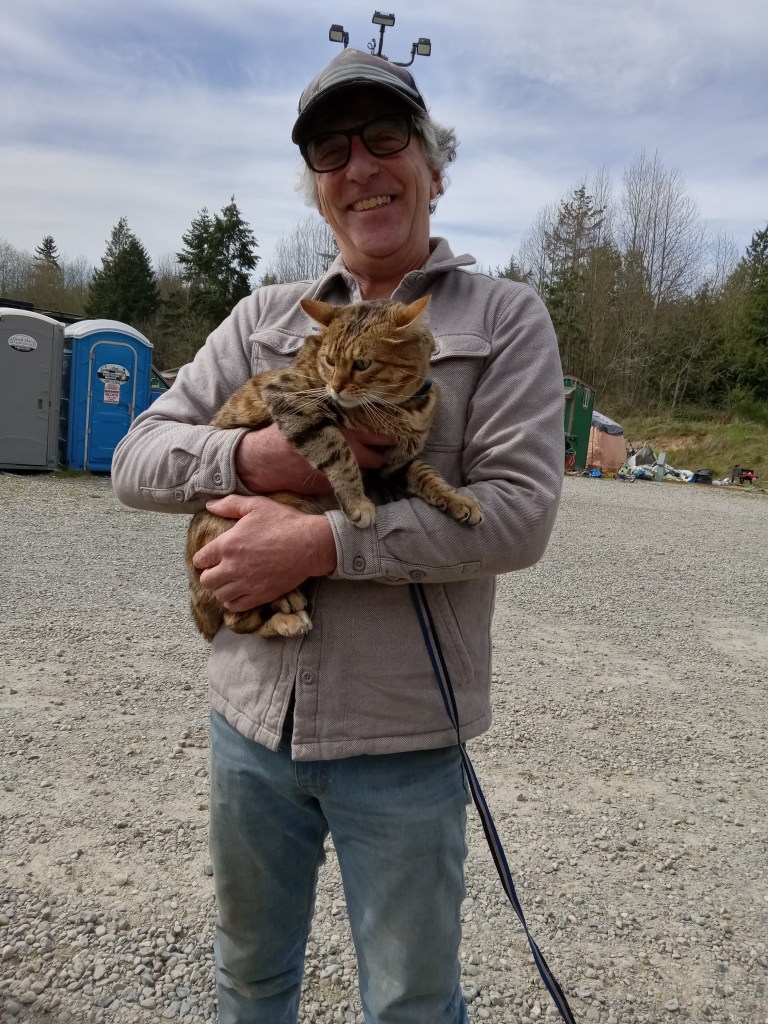
Here are photos from our 2023 clinic:



 Pet Helpers Port Townsend